Adapting to What Matters
Rethinking Grantmaking in Real Time
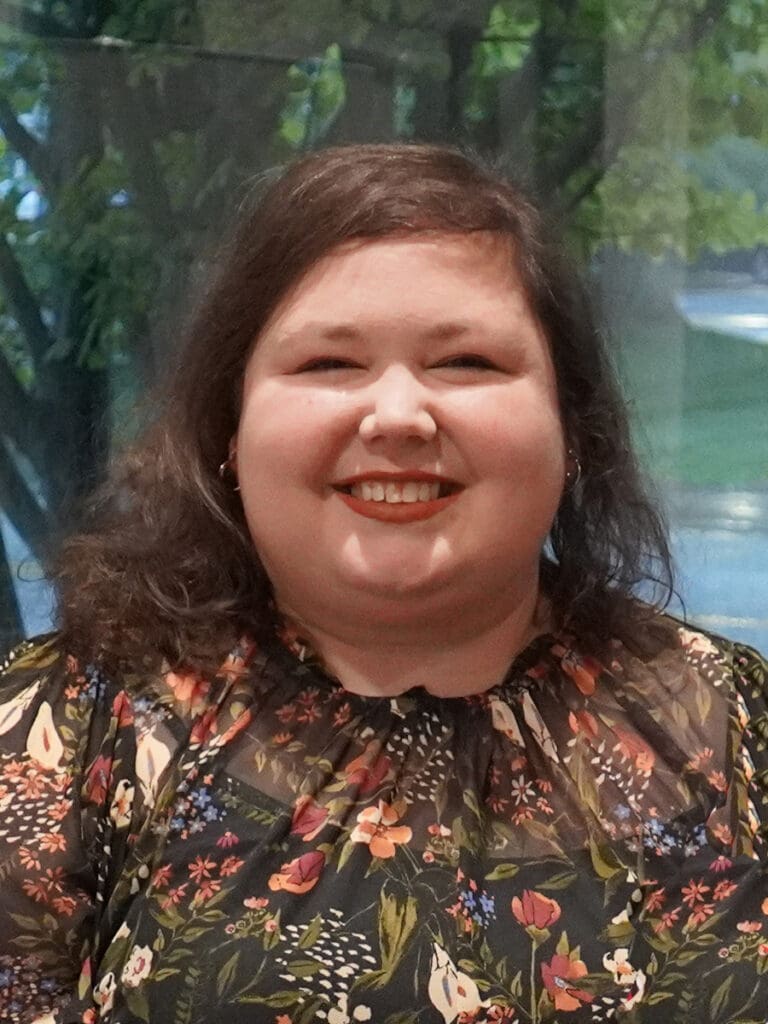
When I joined the Spartanburg County Foundation in 2024 as a Grantmaking Officer, I carried uncertainty not only for being the new employee, but also my suitability for the role.
On the surface, grantmaking can look like a role defined by spreadsheets, timelines, and deadlines—important work, but potentially removed from the day-to-day realities of the community. Coming from a background in social work, case management, and service through AmeriCorps, I wondered how well my experience would translate.
I’ve since learned how inaccurate that perception is.
As part of the Community Leadership team, my role does include spreadsheets and planning, but what makes that work meaningful is everything behind it. I’m not just building timelines; I’m a part of a team helping shape them based on what we are hearing, seeing, and experiencing in our community every day. The “why” behind the work is what has always excited me most.
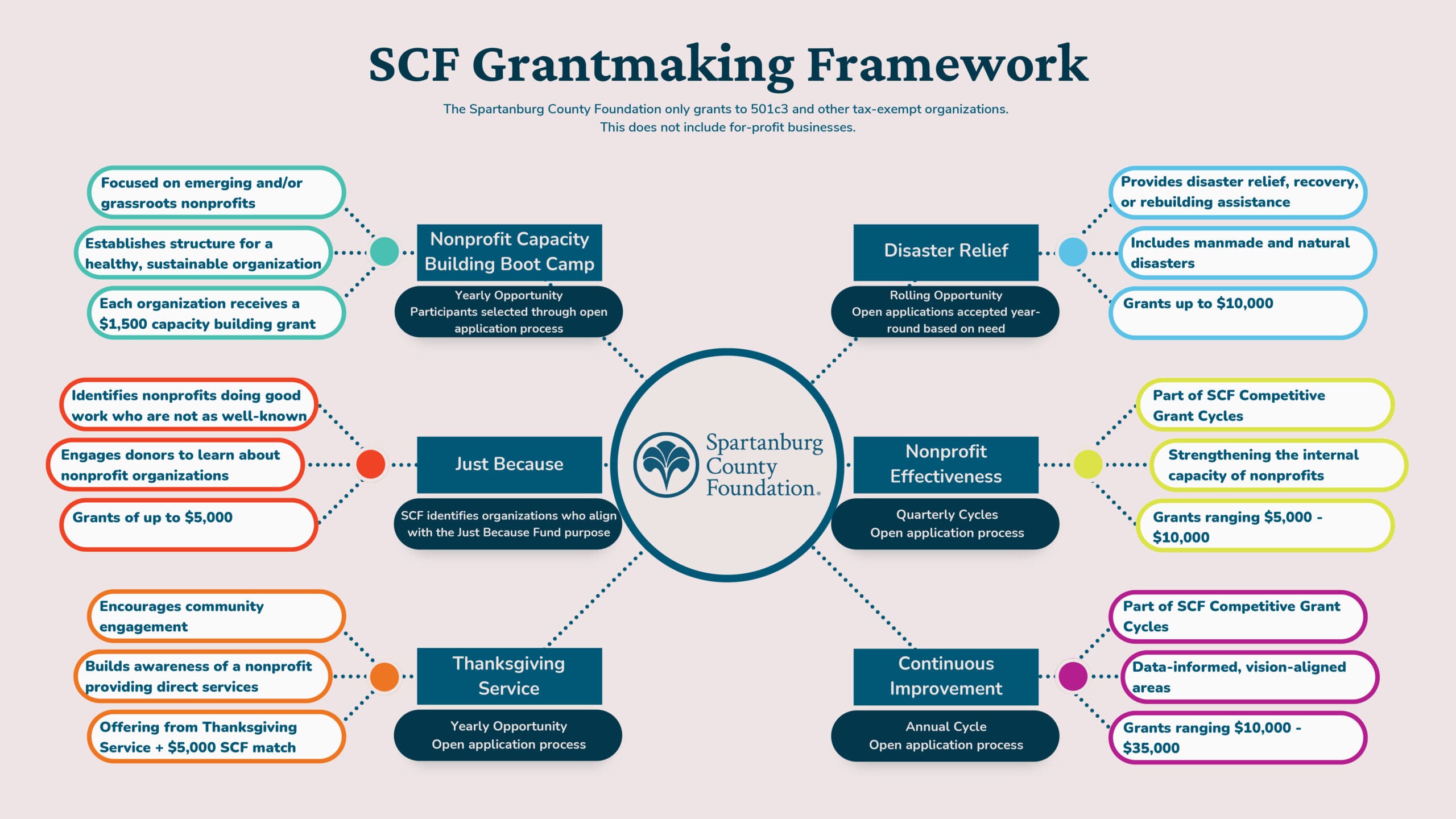
From the beginning, it was clear that our decisions were grounded in current community needs, not just tradition. That alone felt like a breath of fresh air and so counterintuitive from my original nerves in moving into this role. After walking through our two primary grant cycles, Continuous Improvement and Nonprofit Effectiveness, and reviewing data from previous years, patterns began to emerge. But more importantly, so did questions. And in a team that values curiosity, questions are where the real work begins.
Rethinking the Continuous Improvement Cycle
The purpose of our Continuous Improvement grants is straightforward: to strengthen and expand the vital work already happening across our community. Historically, this cycle operated twice a year—in the spring and the fall. But when we looked closely, something didn’t add up.
One cycle would be highly competitive, filled with strong, innovative applications. The other would be noticeably quieter. If our goal is to be the best possible stewards of funding, why were we splitting resources across two uneven cycles? Were we unintentionally limiting impact by holding onto a structure simply because it was familiar?
Instead of accepting that imbalance, we made a change. We moved to a single, more strategic cycle; one that allows us to see all applications together, compare them more holistically, and make more informed decisions. But we didn’t stop there.
We also asked: How can we make this process more accessible for the organizations doing the work?
Having been a grant writer myself and knowing that in many organizations that role is just one piece of an already full plate, I’ve seen firsthand how time-intensive applications can be. In reality, many nonprofit leaders are balancing multiple roles: executive director, program manager, HR, maintenance, or more. To keep it brief-we simplified
We introduced a Letter of Interest (LOI) as the first step. They are shorter, more focused, and far less time-consuming. From there, one of the most impactful changes followed: our Community Leadership team began meeting directly with organizations before inviting full applications.
Those conversations became invaluable. They gave us deeper insight into each organization’s work and enabled us to advocate for them more effectively during the review process. At the same time, they created space for clarification, alignment, and stronger applications overall. After just one cycle, the difference was clear. Applications were more focused, and perhaps more importantly, our relationships with these organizations were stronger.
Meeting Needs in the Moment: Nonprofit Effectiveness Grants
We then turned our attention to our Nonprofit Effectiveness grants, which focus on strengthening internal capacity.
Here, the challenge was different, but just as important.
Capacity needs don’t operate on a fixed schedule, unfortunately. They arise in real time, often unexpectedly. If an organization’s critical equipment fails or an internal system needs immediate improvement, waiting for the next biannual cycle simply isn’t realistic. To truly support our community, we had to align our processes with that reality. If I am trying to provide meals and my oven goes out, what am I supposed to do if the next opportunity for local funding is six months off?
Grounded in Community, Not Prediction
When we made these changes, we weren’t trying to predict the future of the nonprofit sector. We couldn’t. What we could do was respond to what we knew—what we were hearing through deep, ongoing relationships within our community. That kind of insight doesn’t come from applications alone. It comes from conversations, partnerships, and being present in the work beyond the paperwork. And that matters. Because when broader shifts did come—particularly changes in federal funding—we saw a significant increase in need. In fact, application volume grew to five times what we had seen in previous years.
Our updated processes allowed us to meet that moment with greater clarity, flexibility, and responsiveness.
More Than Spreadsheets
My role still involves plenty of spreadsheets and planning.
But now, each timeline represents something more. Each adjustment reflects an intentional effort to serve our community as effectively as possible, using the information we have and the relationships we continue to build.
For me, that’s what grantmaking should be. I am not removed from the important work. I am still a part of it. Not static. Not distant. But responsive, thoughtful, and rooted in the understanding that behind every application is work that matters and people who are doing their best to meet the needs of others. And if we can design our processes in a way that better supports them, then we’re moving in the right direction.
Hailey Barnhill joined the Spartanburg County Foundation in 2024 and is a valued member of the Foundation’s Community Leadership Team. Even when digging into spreadsheets, she is passionate about building strong relationships and thoughtful processes that support the Foundation’s Grantmaking Framework, helping ensure it continues to make a meaningful difference in the lives of all Spartanburg County residents.